
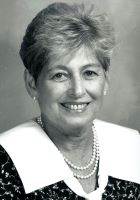
Lucille S. Hurley
Professor of Nutrition, Emerita
Dr. Lucille S. Hurley, a distinguished figure in the field of maternal nutrition and perinatal development, made groundbreaking contributions to the understanding of how diet can influence genetic outcomes. Her passing on July 28, 1988, was a significant loss to the scientific community, education, and public health advocacy.
Born in Riga, Latvia, on May 8, 1922, Dr. Hurley immigrated to the U.S. at a young age and pursued a career in nutrition, earning her B.S. from the University of Wisconsin in 1943. Post-World War II, she furthered her education at the University of California at Berkeley under Professor Agnes Fay Morgan, obtaining a Ph.D. in Nutrition in 1950. Her doctoral research focused on pantothenic acid deficiency in rats, which laid the foundation for her future work.
Dr. Hurley’s career flourished at the University of California at Davis, where she began as an Assistant Professor of Nutrition in 1955 and rose through the ranks to become a professor of internal medicine in the Division of Clinical Nutrition at the U.C. Davis Medical School. Over 33 years, she was instrumental in evolving the Department of Home Economics into a leading Department of Nutrition.
Professor Lucille S. Hurley’s scholarly output was immense, spanning over 300 publications. She is renowned for pioneering research on how maternal zinc deficiency affects pregnancy outcomes, having authored 175 papers on the subject. Her work primarily focused on identifying the structural and biochemical damage caused by zinc deficiency during the perinatal period. Notably, her research shed light on the subtle effects of marginal zinc deficiency and its impact on the development of the immune system in offspring. Additionally, Dr. Hurley’s investigations into manganese nutrition and metabolism, which resulted in 56 peer-reviewed articles, further cement her legacy as a prolific researcher. Her research in the 1970s and 1980s also delved into the interactions between nutrients and drugs, as well as nutrients and the immune system, culminating in her influential book “Developmental Nutrition,” published in 1980. Hurley’s legacy is forever marked by her commitment to improving maternal nutrition and her influence on the scientific understanding of developmental biology and nutrition. Her work continues to inspire researchers and educators, underscoring the importance of dietary choices in shaping health outcomes for mothers and their children.
Her professional accolades were also numerous, including two Guggenheim Fellowships, the Borden Award in Nutrition, and the E. V. McCollum International Lectureship, among others. The University of California, Davis, honored her with the Faculty Research Lecturer Award, the highest recognition for faculty members. Dr. Hurley’s dedication extended beyond research; she was actively involved in professional societies and international committees, contributing to the National Institute of Dental Research, the National Institutes of Health, and the National Academy of Science-National Research Council. She also played a pivotal role in the Trace Elements in Man and Animals (TEMA) meetings, particularly as the chairperson for the 1987 conference. Her leadership was recognized by her peers, as evidenced by her roles within the American Institute of Nutrition, where she served as secretary, councilor, and president, and as president of the Society for Environmental Geochemistry and Health.
As a mentor, Dr. Hurley’s influence was profound. She imparted four key lessons to her students: a strong work ethic, the importance of clear communication in science, the courage to challenge established ideas, and the pursuit of innovative research avenues. Her teaching philosophy was rooted in the belief that there are no untouchable truths in science, encouraging rigorous scrutiny of all ideas, including her own. Dr. Hurley’s early research debunked the notion that mammalian embryos were shielded from maternal nutritional deficiencies, thus pioneering the field of trace elements in developmental nutrition. Her passing left an indelible mark on the scientific community, her students, and her family.
D’Ann Finley
Carl Keen
Bo Lonnerdal
Gerardo G. Mackenzie
Robert Rucker

