
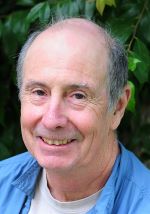
Bruce D. Hammock
Distinguished Professor of Entomology
Born on August 13, 1947, in Little Rock, Arkansas, Distinguished Professor Bruce Hammock passed away peacefully, surrounded by his family, on January 5, 2026, in Davis, California. After earning a B.S. in Entomology with a minor in Chemistry from Louisiana State University in Baton Rouge in 1969, Bruce began a lifelong association with the University of California as a graduate student and later as a postdoctoral scholar. He went on to devote his academic career to the University of California, serving on the faculties of UC Riverside (1975–1980) and UC Davis (1980–2026). This enduring commitment to the UC system was interrupted only briefly in 1974, when he spent a year at Northwestern University as a Rockefeller Fellow.
Bruce distinguished himself as an instructor not by the quantity of courses he taught, but by the extraordinary quality of his teaching in toxicology and entomology. He combined a remarkable gift for storytelling with the Socratic method, engaging students in ways that fostered curiosity, critical thinking, and long-lasting learning. Former students often recalled his lectures decades later. Bruce would bring fruits, celery, and other vegetables to class, offer them to students, and then explain why eating celery followed by exposure to sunlight can cause phytophotodermatitis. Such demonstrations transformed abstract concepts into unforgettable lessons. Bruce had a talent for embellishing and dramatizing stories to drive home a scientific point. After describing the elegant experiments through which Stefan Kopeć demonstrated that insect brains produce hormones, Bruce would ask his students, “What do you think he got for that discovery?” Many would confidently answer, “The Nobel Prize.” Bruce would then pause before revealing the sobering truth: Kopeć was executed by the German occupation authorities during World War II as part of their campaign against the Polish intelligentsia. The lesson was not only about scientific discovery, but also about the human stories behind science and the fragility of the institutions that sustain it. Bruce was, quite simply, an instructor par excellence. In 2008, the Davis Division of the Academic Senate formally recognized his exceptional contributions to education by awarding him the Distinguished Teaching Award.
Bruce’s scholarly accomplishments were even more remarkable. Measured in the traditional currency of academia, his productivity was extraordinary. Over the course of his career, he published, on average, approximately one peer-reviewed paper per two weeks, culminating in an enduring legacy of more than 1,500 scientific publications. Equally remarkable was his ability to bring people together. Throughout his distinguished career at the University of California, Bruce collaborated with 3,563 scholars, including students, postdoctoral scholars, visiting scientists, and colleagues from around the world. One of those collaborators, Professor K. Barry Sharpless of Scripps Research, recipient of the Nobel Prize in Chemistry in 2001 and 2022, remembered Bruce as “a modest man in many ways who was very driven to do something.” Reflecting on Bruce’s uncommon qualities, Sharpless asked, “What made him like that, and how can we teach that?” His longtime colleague and friend, Distinguished Professor Emeritus James R. (Jim) Carey, who worked alongside Bruce for more than forty years at UC Davis, described him in a single word: magnanimous. Despite his many accomplishments, Bruce remained remarkably humble. Following his election to the National Academy of Sciences (NAS) in 1999, he remarked, “I look around and see hundreds of colleagues more worthy.”
The University repeatedly recognized Bruce’s exceptional scholarship. In 2000, the Davis Division of the Academic Senate awarded him its highest honor for research, the Distinguished Faculty Lecture, now known as the Distinguished Research Award. In 2003, he was appointed Distinguished Professor. These honors cited his pioneering work using immunochemical methods to analyze and monitor human exposure to environmental chemicals. While this body of research, documented in more than 300 peer-reviewed publications, was itself sufficient to support his election to the NAS, it represented only one facet of his scientific contributions. Bruce’s impact extended across multiple disciplines. As a co-discoverer of soluble epoxide hydrolases, his research transformed our understanding of inflammation and opened new avenues for therapeutic intervention. His discoveries laid the foundation for promising clinical applications in the treatment of pain, inflammation, and neurodegenerative diseases. Beyond his scholarly publications, Bruce held approximately 95 patents spanning agriculture, environmental science, and medicinal chemistry. In recognition of his extraordinary record of innovation and invention, he was elected to the National Academy of Inventors in 2015.
Recruiting Bruce to UC Davis was a major coup for the university. The effort was set in motion on a Friday afternoon when then-Chair of the Department of Entomology, Professor Emeritus Robert (Bob) K. Washino, persuaded Dean Charles Hess (1931–2019) to fly with him to the UC Riverside campus to personally recruit Bruce. Their mission succeeded, and in 1980 Bruce joined the UC Davis faculty. What followed was more than four decades of extraordinary scholarship, teaching, mentorship, and service. From the day he arrived until his passing, Bruce remained fully engaged in scientific discovery. Indeed, only a few weeks before his death, he was celebrating the award of a new research grant to his laboratory, a fitting testament to a career defined by boundless curiosity, energy, and commitment to advancing knowledge.
Few scientists have matched the breadth of Bruce Hammock’s contributions as a scholar, inventor, collaborator, mentor, and scientific leader. It often seemed as though the 28,635 days of his life contained more than the usual twenty-four hours. Despite an extraordinary scientific career, Bruce always found time for family, friends, and the pursuits he loved. He delighted in the natural world, whether kayaking, rock climbing, hiking, or organizing spectacular water balloon fights in the summer and Fourth of July fireworks displays. Bruce lived with boundless energy, curiosity, and enthusiasm. Through his discoveries, mentorship, and generosity of spirit, he enriched the lives of countless students, colleagues, friends, and family members. Distinguished Professor Bruce Hammock left the University of California stronger, the scientific world richer, and all who knew him better for having shared in his remarkable journey.
Walter S. Leal, Frank G. Zalom, and Guodong Zhang
